
Just Enough Friction

As a kid, Sunday afternoons were reserved for Nascar races. In a time back before every race was on TV, we often found ourselves sitting in lawn chairs in the front yard of my grandmother’s house listening to the race on the radio. Nascar was a source of great pride for our family and more than one yelling match.  In the mid-eighties, a family with divided loyalties had a hard time eating together without a fairly direct conversation.  My brother and I were strictly Chevy guys and rooted for Dale Earnhart. At the same time, other less domesticated members of our family drove Fords and were well entrenched in the camp of Bill Elliott.  It made for more than one memorable Sunday, and my mother hated every minute of it.  My grandmother was usually the referee and would let it go on for a while before stepping in and letting us know we had crossed the line.   Interestingly, I still watch racing, but I sometimes root for an Elliott who now drives a Chevy while I drive a Ford. It’s funny how things turn out.  

Almost every type of auto racing is built on the management of friction.   Cars that have too much friction are too slow to be competitive. Those with too little friction usually find the wall or some other hard surface that reduces their chances of winning.  The trick is to find the sweet spot.  Just enough friction to make it through the corners but not so much that you lose speed and positions to other cars.   Winning is all about the physics of friction.

For our youngest students, learning and growth are all about managing the physics of education friction.  If every lesson is too easy, nothing is gained or learned.  Make the process too complicated, and you risk them giving up and disengaging before they ever make it to a point where they are proficient.   I remember being told a story about a young twelve-year-old boy who always begged his dad and grandad to teach him to drive.  One early June Saturday, while the family was loading hay onto a trailer, the boy was tossed the keys and told to drive slowly. If he dumped the trailer, he picked it back up by himself.  I’m not sure if this was a disproportionate amount of friction, but he didn’t pick up hay that day. The friction involved made sure he learned a valuable lesson in driving and responsibility.

When we find the sweet spot with our students, magic happens.  Both at school and home, we have to find ways to make sure we are making the work just difficult enough for our students.  In educational terms, we call this differentiating instruction.  In its simplest form, it’s about individually managing the amount of friction for each of our students so that they can be put in a position where substantial growth can occur.  The amount is different for each child depending on their age, ability level, and passion for the subject matter.  When we send homework, great teachers have thought through this friction and made assignments that maximize growth and allow students to struggle just enough.  While I know my first instinct was usually to fly in and help my child “do” their homework,  my wise wife would remind me that I needed to back up and let him do it on his own.  She was always better at understanding the amount of friction he needed.  I seemed to either apply way too much or far too little.  So I tended to listen to her wise counsel.  When we give them support but allow them space to struggle, we help them grow. Excellent teaching and great parenting are about figuring out how to give our children just enough space and support to safely figure out the physics of friction on their own.
No Apostrophe Needed

This Wednesday, we celebrate Veterans Day.  The day was first celebrated in 1919 as the first anniversary of the armistice that ended World War I.  Over the years, we have added more wars to the list, more veterans to the rolls, and more blood equity into the overall cost of our freedom.  The remembrance of the armistice that started on the eleventh day, of the eleventh month, at the eleventh hour of 1918, would eventually become the holiday we celebrate this week.  Grammatically speaking, Veterans Day does not have an apostrophe.  The holiday does not belong to any one veteran or group of veterans.  It is a day to honor each and every person who ever signed a blank check and honored this country with their service.

My father’s father was thirty-three when he joined in the aftermath of the attack on Pearl Harbor.  He would leave nine kids at home and cross the Atlantic for Europe.  He returned a few years later with a head full of stories, a permanent limp, and a purple heart. I remember a set of braces next to his bed, a necessity due to the damage his legs took from a land mine.  Some of the best years of my childhood was spent sitting next to his rocker, listening to stories from half a world away.  He was incredibly proud of his service and never complained of the cost.   

My mother’s father dreamed of being a teacher and, at seventeen, left for college.   His draft card lists his address as Box 74, Western Carolina Teacher’s College, Cullowhee.  He had started classes and spent the first semester preparing to be an educator.  On January 9th, 1945, his eighteenth birthday, he left college and joined the Air Force.  He would never continue his preparation for teaching after returning from the war.  I like to think that my decision to spend my life in education would have made him proud, completing the dream that he surrendered on behalf of his country.

My father spent two tours with the First Infantry Division in Vietnam. I was blessed to be raised in a home where sacrifice and service were both honored and respected. So many of the freedoms we enjoy and, at times, take for granted were paid with an overwhelming personal cost. Our enduring freedom has been earned by those that gave their lives. It’s what Abraham Lincoln called, “The last full measure of devotion.” It has also been earned by both men and women who have left their families, put their dreams on hold, and returned home with permanent scars, all in the name of freedom. This Veterans Day, I encourage you to take the time to find a veteran and simply say, Thank You!

“Never was so much owed by so many to so few.”- Winston Churchill

Water Hose Hospitality

We all have lessons that shape us.  Powerful lessons can sometimes come in uncommon forms.  As I think back to my youth, many of those lessons were formed not only by the words of men and women I respect but also by their actions.  A water hose shaped one of the most powerful lessons I learned.  For that matter, it was shaped by about a dozen water hoses.   

Thirty-one years ago this past month, my wife and I started dating.  Before we were married, we would spend a week each summer camping in a primitive campground in the National Park near our home with her family.  Although a camper allows you to have many of the conveniences of home, in a primitive campground, you must do without power, sewer, or water hookups.  You must ration your supplies appropriately.  It was midweek, and we had just finished breakfast when I was handed a water hose and asked to help.  Over the next hour and a half, we would go from camper to camper collecting water hoses, put them together, and hook them up to the one faucet that supplied the entire campground.  We would then go campsite by campsite asking if anyone needed water.  We must have had more than a dozen hoses hooked together and spanning several hundred feet to make it around trees and cars and see that everyone had water.  Holding tanks, gallon jugs, five-gallon bottles, it didn’t matter what they had. We would fill them.  It only took a little longer than it would have to fill one or two to supply everyone.  We had already done the hard work of hooking everything up.  By the time we were finished, the lesson was clear.  When given the opportunity, take care of your neighbors.  

As we are about to head into the long winter months, being neighborly may be what some of those around us need more than anything.  A call to check-in.  An offer to pick something up at the store.  A few minutes of our time just to listen. A recent article in the New York Times focused on the impact of social distancing on the elderly. It has created a new “slow killer” in isolation and solitude.  Isolation and solitude have also hit many of our school families as they deal with quarantines and the other ripple effects of this pandemic.   

We walk past opportunities to help others every day.  There is also a new hesitation to help because we may risk exposing ourselves and our families to the virus and its potentially devastating effects.  While we have accepted that the virus will change the way we interact with others daily, let’s not allow it to change our compassion for our neighbors.  There are safe opportunities to offer assistance and offer an ear for those that may be feeling the most isolated.  Our compassion for our neighbors does matter!

Right now, we are having a water hose moment.  Those around us need water, and many of us have the hose in our hand.  The question we must all face is, “What will I do with the opportunity I have.” I encourage you to use your water hose moment well.

The Hard Way

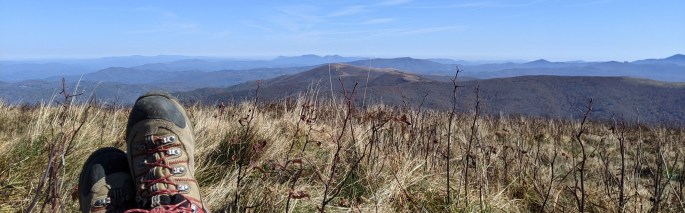
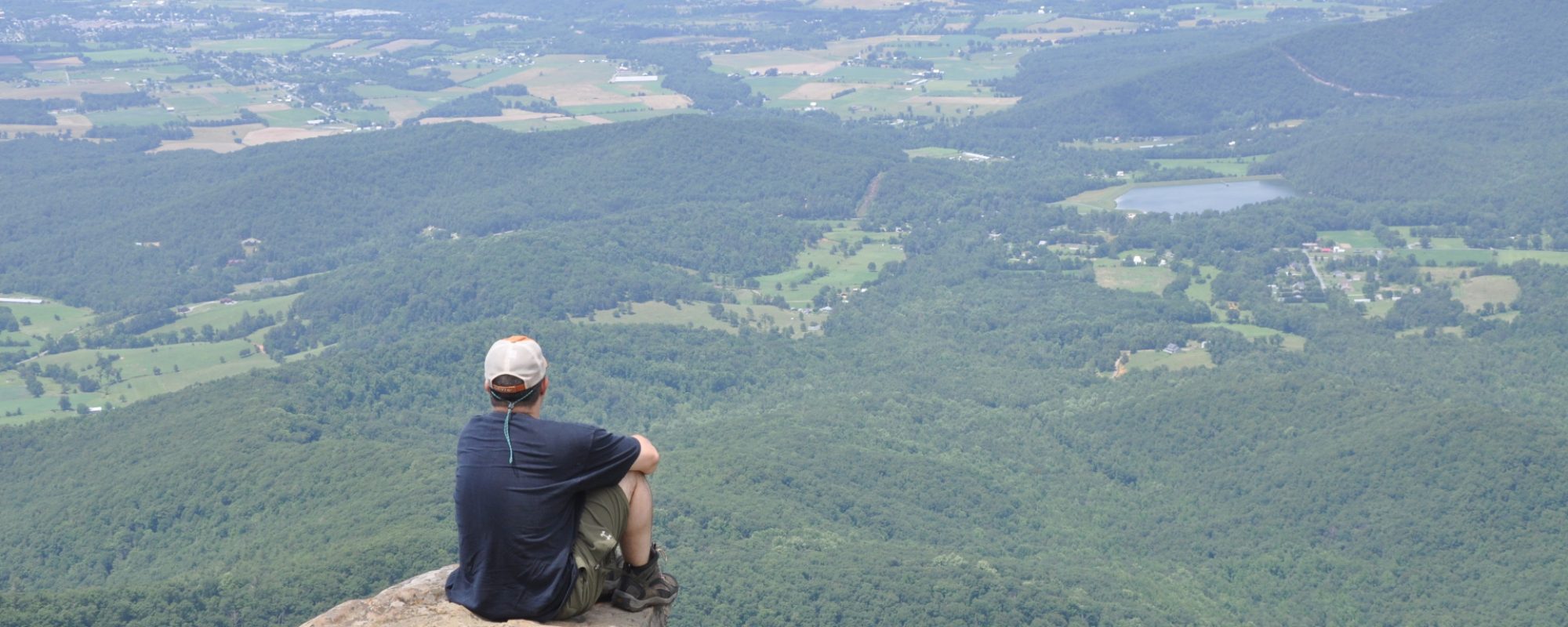
The Silence. The Solitude.  The sun beating down on your face while the crisp fall air blows around you.  I love the outdoors.  Last weekend, my wife and I took a two-hour drive north into the Roan Mountains on the border of Western North Carolina and Eastern Tennessee. When we arrived, vehicles crowded the parking lot. Had we gotten there any later in the morning, we would have been waiting for a spot to park.  As with most crowded trails, the majority of the traffic dissipated in the first mile, and after three miles, only a few hikers were around.   By the time we arrived at the grassy bald four miles deep in the woods, we were relatively isolated, with only an occasional hiker passing by.  I love and long for these kinds of moments.   After a four-mile hike, we spent the next half hour laying in the grass, staring out into an amazing view of the mountains.  Very few moments are as energizing for me as these quiet moments on a distant remote mountain top.

After spending a fair bit of time in the woods, we have perfected what we are comfortable with in our packs.  I am always looking for ways to reduce how much we carry but not compromise on the essentials. I usually have a favorite light sweater, a light rain jacket, a first aid kit, a multitool, water, and a light snack.  Enough that I could make it through a cold night in the woods if disaster struck, but not so much that I am carrying half the house with me when I travel.  Having the proper equipment and wearing the appropriate clothing and footwear has been critical for us on more than one occasion.  

A few years ago, I was called in the early afternoon to help with an injured hiker’s carryout a few miles deep into the woods.  It was summer, so I had on shorts and a t-shirt and was young and inexperienced.  I never considered the possibility we might be deeper in the woods than I anticipated and that it might take longer than I thought.  We were six miles into the woods when we found the injured hiker, and we quickly realized that we would not have enough daylight to cross the creek with him multiple times safely.  We decided to pack in with him for the night and bring him out the next morning.  I spent a frigid night in the woods because of my poor preparation.  

The event stuck with me, and as I have gotten older, I notice it when we pass hikers that are ill-prepared for the circumstances they are facing.  This Saturday, we were hiking a section of trail that was covered by round mid-sized rocks.  The kind that would easily curl an ankle if you were not incredibly careful.  Because of both experience and age, I have boots that have a considerable amount of ankle support.  The young man that passed us at the three and a half mile mark had neither the experience nor the footwear for the trail he was on.  He appeared to be a young middle schooler, and he had chosen to hike this day in a pair of beach sandals.  Yes, plastic beach sandals.   Held on by a tiny amount of fabric at the front of the foot, it was clear he had not experienced a twisted ankle deep in the woods. I could only hope he didn’t learn his lesson on the day he walked in front of me.  We had no interest in having to help carry him out of the woods.

While I don’t want to wish bad luck on anyone, lessons learned the hard way are some of the best lessons.  Twenty years ago, I got stuck in the woods on a cold night, unprepared for what I would face.  I haven’t made that mistake again.  As my son grew into an adult, I would caution him and give him the sage words of an elder’s wisdom.  He never listened to those lessons quite as well as he did the ones he learned the hard way.  He never messed with an electric fence after touching it the first time in the pasture.  He was a bit more cautious after going too fast on his bike and wiping out.  We never want to put our children in a position where they can be seriously injured or permanently damaged by avoidable mistakes, but sometimes we do need to step back and let them figure it out on their own.  Because lessons learned the hard way are lessons that will stick with them for a lifetime.

Toothpaste Moments

When the alarm went off this past Monday, I got up and began my usual morning routine.  Within a few minutes, I was about to brush my teeth when I realized the toothpaste tube was empty.  I didn’t miss a beat, I reached into the cabinet, took the scissors, and I cut the top off of the tube of toothpaste.  I didn’t think about it much. We had used most of the toothpaste and had already rolled up the tube to get as much out as we could.  For most of the week, there has still been enough left in the two ends of the tube to brush every morning, and I am just about ready to discard it and open a new tube. Let’s say I might be a bit frugal.

I didn’t just happen to decide to cut the top off the toothpaste. For most of my childhood, it was a part of the regular rhythm.  We would open a new tube, and use what we could, then roll it up for a few days. After that, mom would cut the top off, and we would continue to use it until the inside of the tube was clean of any remnants of paste.  For the record, we would also pour water in the shampoo bottle to get out what was left.  These lessons somehow stuck with me.  If you are blessed to live long enough, we all will begin to act like our parents. For me, this was one of those moments.

It’s funny what lessons you take from your childhood.  Something about the toothpaste moment left a lasting impression.  As we go about our day to day working with students, I often wonder what lessons they will take with them.  How will they remember their elementary experience?  For me, much of that memory includes nature walks, field days, and talent shows.  I remember our first-grade “show and tell” days, but I don’t remember a lot about the classroom instruction.  I know I was in the hall more than I should have been, and the teacher liked to use her paddle on little boys that were a bit distracted.  I remember the book my teacher chose to read to our fourth-grade class.  I remember very few lessons.  I remember very few assignments.  But, I do remember the powerful moments.

As we go about helping young children develop, teachers and parents must become cultivators of moments that matter.  I encourage you to look for opportunities to chase these memories with your children.  These are the moments that will cement themselves in the minds of the next generation. Some of these moments we can’t control, tragedies and celebrations will both be remembered, as well as vacations and significant events.  Children also observe us and develop their sense of work ethic from what they see, their response to difficulties from how we respond.  We never know from day to day what they will remember.   

There will be both celebrations and tragedies, but there will also be a bunch of stuff in between.  We will make many lasting impressions.  Some will be enjoyable; others will be painful. We can only hope that sandwiched in between are a few toothpaste moments where our actions teach a valuable lesson that isn’t soon forgotten. 

Thanks, Mom! The toothpaste lesson stuck with me.

Consistency

During autumn evenings, I like to sit on the front porch, surrounded by quiet, considering the events of the day.  For the last few nights, as I sat in my rocking chair, I noticed a faint blinking red light off to the north that eventually crossed in front of the house at around 30,000 feet and then disappeared into the distant horizon of the east.  After the third night of watching the light travel the same path at around the same time, I got curious.  It turns out that the plane is a regularly scheduled flight from Chicago to Charlotte.  It takes off around 6:20 in Chicago and lands around 9:30 in Charlotte.  A little after 8:30 each evening, it appears in the night sky.  It caught my attention because of its consistency. 

Those of us that struggle with overorganization often crave consistency, predictability, and routines.  There is an unquestionable comfort in being able to anticipate what’s next.  There is comfort in having a well thought through plan.  It is an understatement to say that I function better in this kind of environment.  From a regular morning routine to a schedule for my days, I crave the comfort of consistency.  

As we have started back to school, we are all settling into the new routines associated with face to face instruction.  Morning arrival routines, meeting routines, and dismissal routines are all becoming part of our typical day again.  For most of our students, this also includes new afternoon routines and homework.  Like adults, many students need the comfort of predictability in their lives.  For the last six months, they have settled into a routine that did not include having to get out of bed and get ready for school.  The sooner we can reestablish these patterns, the easier it will be for them to adapt to the new normal of school life.  

Changing our routines can be difficult.  Tonight is the first time I have written one of these posts in the evening since I began writing them after students were sent home in March.  I settled in and enjoyed writing time in the mornings with a cup of coffee in my hand.  Writing before the sun came up was the norm, but I now realize that my mornings are quite full, and I have shifted my routine to write in the evenings after dinner. I’m not sure I like it!  I am reminded that settling into a new habit can be a struggle for some of us. If you are dealing with a child struggling with the new routine of school, I encourage you to give them a little space and a bit of grace.  They may need some time to embrace it.  Most of them need routines, they need consistency, and they need a little time to figure it out.  

While I am struggling with some parts of this new process, I have fallen in love with other features.  My new favorite part of the day is greeting our students and watching them enter the adventure of the day with wide-eyed enthusiasm and excitement.  I find myself in the evenings looking forward to the mornings and the experience that awaits.  As crazy as it sounds, I love the car line, the good mornings, and the hellos.  I have to remind myself that while change can be scary and I still hate having my plans and routines altered without warning, sometimes the new opportunities are amazing.  Just like the opportunity to greet our incredible kids every day!

Important Work!

“There are people in this country who work hard every day
Not for fame or fortune do they strive
But the fruits of their labor are worth more than their pay
And it’s time a few of them were recognized.”


-Alabama (Forty Hour Week)

Growing up in the rural south, I spent many Saturdays in my dad’s white Chevy pickup truck traveling the roads between town and my grandfather’s farm on Fines Creek.  Once you got out of town, the radio didn’t work well, and dad only had one cassette tape, so we listened to the same Alabama album every Saturday.  The opening lines from Forty Hour Week have stuck with me through the years. It helped form a deep sense of appreciation for those who work to make others’ lives a little better. 

For more that one hundred years, we have been celebrating Labor Day. Its roots trace back to the New York City labor unions of the early 1880s. Peter J. McGuire, the co-founder of the American Federation of Labor, suggested a day for those who “have delved and carved all the grandeur we behold.” It may be a bit easier to notice and appreciate those working around us in times of struggle and strife. In 2020, we have a newfound perspective and appreciation for those essential workers who have played a small part in getting us through the last eight months.

There are so many essential workers that need to be thanked. Educators across this country would certainly be included in this list, especially the educators I work with each day. We are just beginning a new school year, and I could not ask for a better group of teachers and support staff to be with through this adventure. From the cafeteria staff to the custodians, and from the office staff to our teacher assistants, everyone has done more than their part to help get the school year started smoothly. Our teachers began meeting with students in July to assess them and start making decisions about how to best prepare them for the year ahead. Not once have I heard a complaint about working face to face with students. I am entirely aware that these teachers don’t come to school without concerns. They have young children themselves, and many have parents and others in their immediate families that are immunocompromised and at greater risk if exposed to the virus. Still, in the face of danger, they have been willing to put their safety and self-interest aside and focus on asking the essential question, “what is the best thing I can do for our students today?” For that, I could not be prouder or more humbled to come to work each day and be greeted by such an amazing group of people.

Not only have they been willing to set aside very real safety concerns to try and do what is best for our students, but they have also been ready to address challenges never faced before in the modern era of education.   They have entirely redesigned instructional delivery stretching far outside the classroom, where they were trained to teach.  They have also done this while having limited access to network resources due to the ransomware attack last week.  I am so proud of their strength and determination, as well as their ability to maintain a positive attitude in the face of overwhelming circumstances.

As we take this weekend to rest and relax, we should take a moment to consider those whose labor has made our lives a little easier, a little safer, or a little more possible.  As I do that this weekend, the faculty and staff at Hazelwood Elementary will be at the top of the list.  Know that you are an amazing group of individuals, and the work you do is critical to our students’ success and the success of our community.  It is some of the most important work and has such a significant impact on the future of so many of those around us.  For that, I say both “Thank You!” and “Rest Well!”  Enjoy the holiday weekend. You certainly deserve it.