Well, here I sit at my desk like some wounded warrior, nursing the aftermath of what the doctor cheerfully called a “minor procedure.” Minor to him, maybe. He wasn’t the one who had to explain to this body that it needed to cooperate with his arbitrary schedule.
Used to be, I could bounce back from anything faster than a rubber ball on concrete. Sick? Just load up on coffee and keep moving. Injured? Walk it off, son. My body was like that reliable old pickup truck that started every morning no matter how much you abused it.
I took that loyalty for granted.
But somewhere along the way, my body decided it was tired of being the accommodating type. Now when I try to jump back into life at full throttle, it stages a rebellion that would make a teenager proud.
“Oh, you want to go back to work tomorrow? That’s cute. How about we extend this recovery another few days?” I used to think pushing through sickness was heroic. There I’d be, making lunches with a 102-degree fever like some kind of parenting martyr.
“Look at me,” I’d think, “still answering emails from urgent care!” What I didn’t realize was that I was teaching my kids the worst possible lesson: that your worth is measured by how much you can endure, not how well you can take care of yourself.
Turns out, our children are taking notes on everything we do, especially the stuff we think they’re not paying attention to. When we drag ourselves around half-dead, we’re not showing them strength. We’re showing them that rest is for quitters and self-care is selfish.
New Goal: Let’s not let that be my legacy. I don’t want that to be what I leave behind.
I can’t count the times in my life where I’ve found myself struggling with my current situation. You know the kind of moments, praying hard, working hard, waiting on God to show up… and all you hear are crickets. Honestly, some of those seasons felt like staring at an empty cup and hoping it would magically refill. In 1 Kings 17, Elijah knew that feeling. God led him to a brook at Cherith, provided for him there, and then one day the stream dried up. Just like that. Not because Elijah messed up, but because God was preparing him for what came next. Sometimes we have to spend a little time beside a dried-up stream before we’re ready for the next thing God has for us. The dry place isn’t the end, it’s the transition. Even the drought has a purpose.
We need to monitor what we carry! This insightful knowledge came to me as I was trudging around the track at the gym, carrying two kettlebells and trying to convince myself that the torture was somehow good for me. The reality is, we all carry weight.
Some of it we choose. Some of it we pick up without even realizing. A little pressure here, an expectation there. A regret. A grudge. A voice from years ago telling us we’re not enough. If we’re not careful, we find ourselves dragging things that were never meant to be ours.
And over time, it starts to show in our patience, in our energy, in the way we show up for the people we love. It’s the same for our kids. They carry things, too. Some of it heavy. Some of it hidden. That’s why it matters to check in.
To pause and ask, “Is this helping us grow or just holding us back?” The right weight will make us stronger. The wrong weight wears us down. Let’s take the time to teach our kids the difference. And let’s be brave enough to let them see us set some things down ourselves.
Growing our Gifts…. Every child has a gift, but it’s not enough to simply have it. They need to use it. Help your kids discover what they’re good at and what lights them up on the inside. Then teach them the critical steps of polishing, practicing, and protecting it.
Raw talent is just the starting point. Greatness comes from the daily decision to work hard, stay focused, and keep getting better. It happens step by step in the slow grind of progress. Show them what it looks like to honor their gifting by giving it their very best.
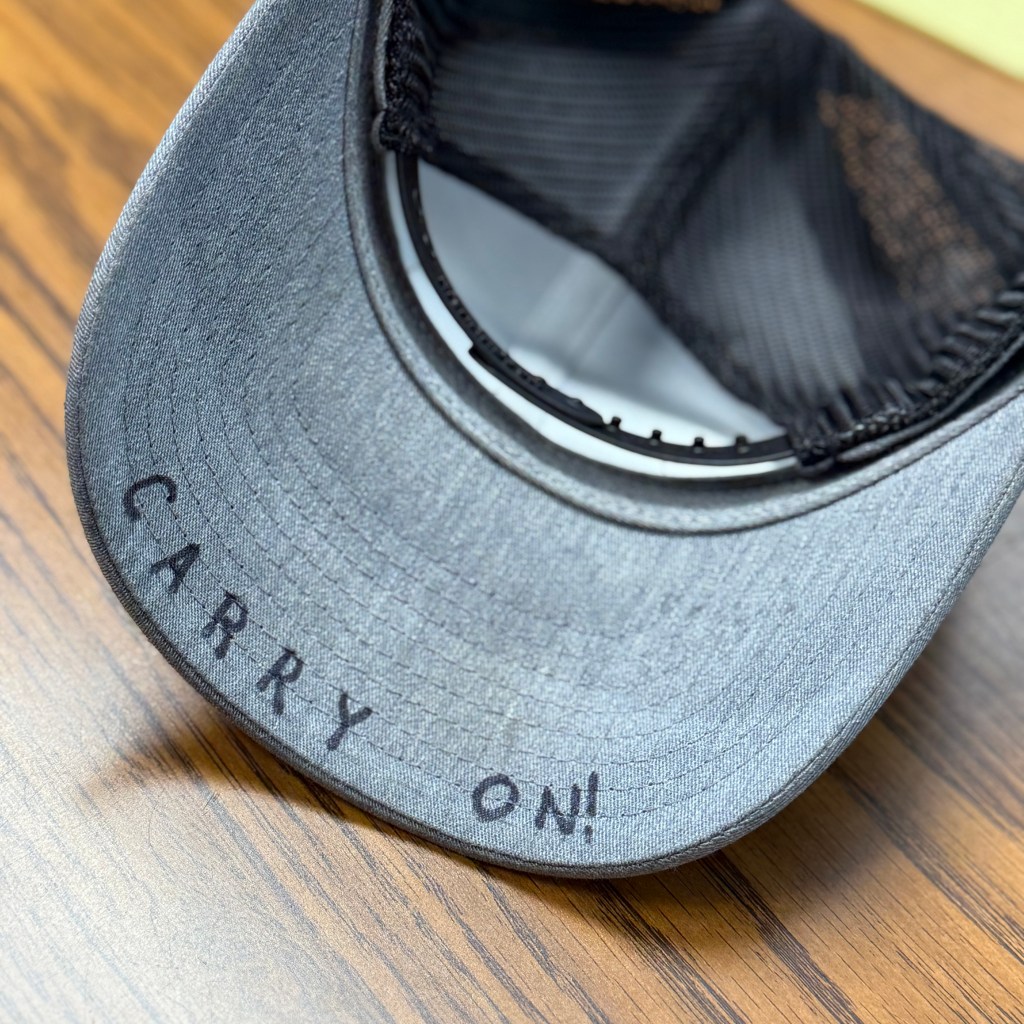
One of the great memories I have of my late father-in-law is something he said regularly. “Carry On, Children.” He said it affectionately to people he cared about when he was getting ready to leave.
It has turned into a rallying call for me. This week, after a tough run, I took off my sweaty cap and wrote it on the inside of the bill where I could read it by looking up when times got tough!
In terms of resilience, “Carry on” means to keep moving forward, even when the path gets steep. Even when you want to quit! It’s the quiet strength to continue despite your brain and body trying to convince you to quit.
It’s not about ignoring pain or pretending everything is fine. It’s about choosing not to quit. To adjust, adapt, and press on. To “Carry On” is to continue to tell yourself that what you’re doing really does matter, and that every step forward builds strength for the road ahead.
It’s one of the most powerful lessons we can teach our kids.
Take the time to read everyday! It’s also one of the best things a child can do this summer is read every single day. It builds fluency, strengthens comprehension, andit builds a habit that keeps their mind engaged.
However, let’s not forget, our kids need to see it from us as well, not just hear it. Too often, we create expections for our kids to read, but they never see us pick up a book ourselves. Make it a family habit. Taking twenty minutes a day can make all the difference.
Understanding what to do when the path gets hard is critical to long-term success. Please don’t turn back, that’s where the growth begins. Struggle builds strength. Setbacks shape resilience. And the tough moments we face with our kids are often the ones that teach the most.
Talk to your children about pushing through. Let them see that effort matters most when things get difficult. Just keep walking. The hard road leads somewhere worth going.
As I write this, we are a week away from spring break for our students and staff. If you are anything like me, spring break provides an opportunity for a much-needed break, but it also offers a chance to catch up on a list of projects that I have been putting off for the last few months. If I’m not careful, I will look up and be ready to return to school after the break needing to get some rest after a grinding week of project after project.
Unfortunately, we often glorify the idea of being constantly busy and productive. I certainly include myself in the portion of our population struggling to find time to rest. We wear our busyness like a badge of honor, measuring our worth by the number of tasks we can accomplish in a day or week. But what if this obsession with productivity is harming our ability to be resilient? What if one of the keys to building resilience is taking time to rest?
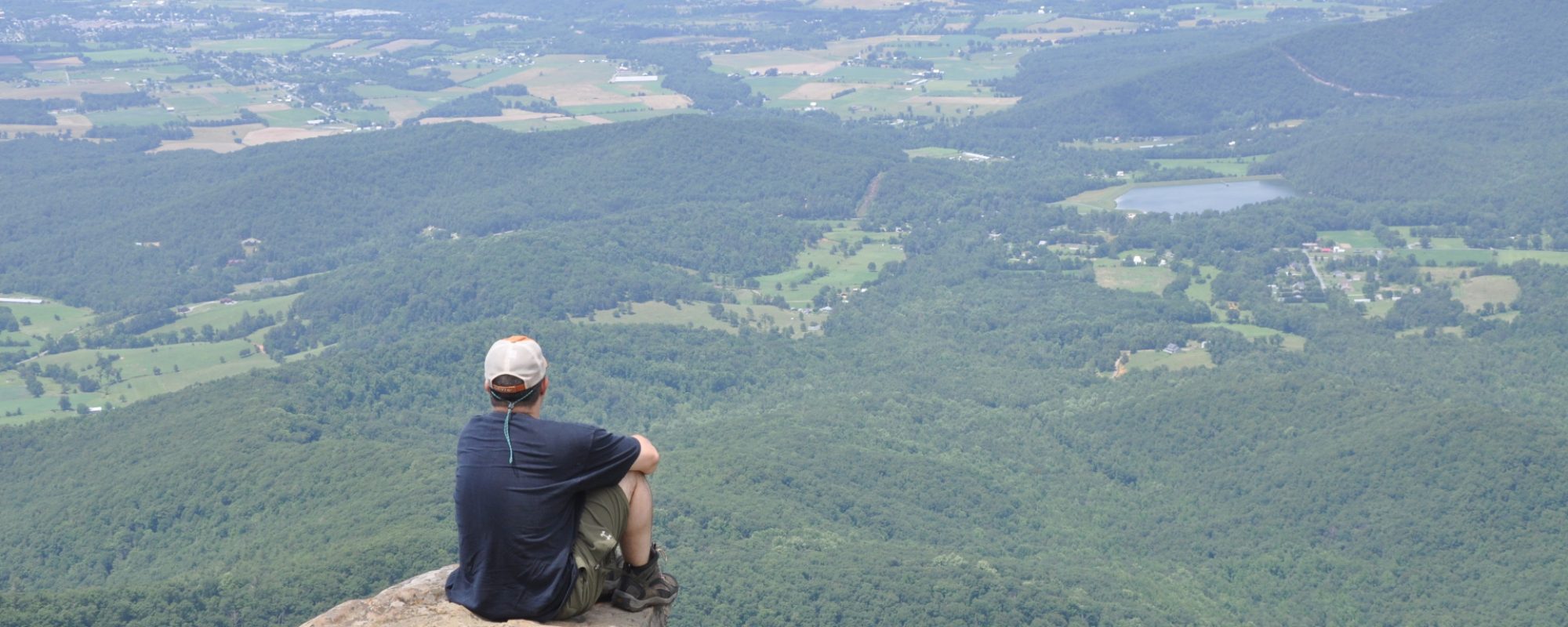
Rest is not laziness or weakness. It is a crucial component of building and maintaining our overall well-being. When we take time to rest, we allow our bodies and minds the opportunity to recharge and recover from the stress and demands of daily life. But rest is not just about taking a break from work. It’s about intentionally creating space for relaxation and rejuvenation. This could mean taking a nap, going for a walk in nature, meditating, or simply spending time with loved ones. Several years ago, Melissa and I began hiking in an effort to maintain our mental and physical well-being. It provided an opportunity for us to disconnect our minds from work while still staying active. While this isn’t a substitute for physical rest, it is one of the many ways we choose to recharge. After a particularly tough week at work, it isn’t unusual to find me in a stream with a fly rod in my hand. We also find rest in a camping trip or a Sunday afternoon drive. Whatever form it takes, rest should be a priority in our lives if we want to build resilience.
Why is rest essential for us?
Rest promotes better immunity and physical health. When we are stressed and overworked, our bodies are not able to operate at optimum levels. We heal slower and are more susceptible to getting sick. [1]
Rest promotes self-care, emotional regulation, and improved mental health. In a well-rested state, I am much more prepared to be the best possible version of myself. I handle difficult decisions and unwelcome news much better than when I haven’t taken the time to intentionally recharge. When our minds are at ease, we can better handle both challenges and setbacks. [2]
Rest improves cognitive function. Over the past twenty-five-plus years of working with students, I have discovered far fewer ways to improve a student’s ability to perform in class more than making sure they have a good night’s sleep. Unfortunately, we regularly have students that arrive at school after having slept poorly, and they struggle academically because of the inability to get the rest they need. When we take time to rest, we give our minds the space to wander, make connections, and explore new ideas. We can focus and make much more effective use of our time when we are fully rested. [3]
Rest is a crucial component of building resilience, and it is just as important a fuel for our bodies as a proper diet. It’s important to prioritize rest in our lives if we want to continue to handle challenges and setbacks with grace and resilience. I hope those of you getting ready for spring break make plans that include a healthy amount of rest.
[1] Prather, A. A., Janicki-Deverts, D., Hall, M. H., & Cohen, S. (2015). Behaviorally assessed sleep and susceptibility to the common cold. Archives of Internal Medicine, 175(4), 463-469. https://pubmed.ncbi.nlm.nih.gov/26118561/
[2] Lovato, N., & Lack, L. (2010). The effects of napping on cognitive functioning. Progress in Brain Research, 185, 155-166. doi: 10.1016/B978-0-444-53702-7.00009-9. https://pubmed.ncbi.nlm.nih.gov/21075238/
My mother was upset when she learned that I wanted to serve RC Colas and MoonPies at my wedding reception. For some reason, she had a more traditional menu in mind for the event. She eventually forgave me. Some things just go better together, and for most of my childhood, RCs and Moon Pies were way up on the list. I would also add Pepsi and Peanuts. I know many of you will argue that it should be Coke and Peanuts, but I’m from North Carolina, and here it’s Pepsi. I would probably add Burgers and Fries to the list as well. I am a real sucker for a great burger with fries. I imagine we all have our own list of unusual combinations that we could also add to the list. For me, I like the saltiness of potato chips with my ice cream, and I usually add a spoon full of my wife’s strawberry freezer jam to the top of gravy and biscuits. Finding foods that go well together is a great reminder that togetherness is a critical component of our lives.
When our school leadership team met this summer, we discussed what we would like our theme to be for this school year. After a lengthy debate, we settled on Better Together, Climbing to the Top. Little did I realize how critical the idea of “Better Together” would be to the start of this school year. Because I love to spend my free time hiking with my wife, I love the visual image. After a busy, stressful week, one of our favorite things to do is to find a mountain with a great view at the top and climb it. Even though I tried not to steer the team in any particular direction, the theme fits me perfectly.
Over the past two weeks, we have witnessed both extremes of togetherness. We watched a mask debate unfold within our school district. We have seen passionate, well-meaning people on both sides of the argument get caught up in this debate. Unfortunately, unnecessary jabs have been hurled by community members that happen to see the world differently. We have also watched a flood devastate our community, and those same individuals work together to help their community recover. If the last two weeks have helped us see anything more clearly, I hope that it is the simple fact that we are better when we are together. Togetherness asks us to step away from our own wants and desires to selflessly carry another’s burdens.
Pulling together is natural for communities when they face the devastation we have witnessed over the last week. Unfortunately, within a few weeks, as the trauma we have experienced begins to fade, we will be tempted to return to the same behaviors we witnessed before the storm. We will be tempted to start hurling insults about political views and mask requirements on social media. We will be tempted to turn back to ourselves and our own wants and desires. If we are not careful, we will become inwardly focused once again.
Togetherness is powerful because it requires us to acknowledge that others matter. It requires us to do the hard work of finding common ground, realizing that most of the time, we are not as far apart in our views as we might imagine. It asks us to keep an empathetic point of view and see the world through the eyes of others that might have a different vantage point than us.
Years ago, I watched a kid put grape jelly on his sausage biscuit. I had never thought of trying the two together. After he walked away, I tried the same combination, and it worked. So now, nearly twenty years later, I ask for a grape jelly packet when I order a sausage biscuit. I watched it being modeled by someone else, I tried it, and it stuck. Our students must see us model togetherness. They must see us finding common ground and working together to find a solution. It can’t just happen after a crisis. It has to be a part of what they see us do on a regular basis. Suppose the only actions regularly modeled for them are anger, decisiveness, and division. In that case, it will be difficult for us to expect the next generation to pull together, keep together, and work together. We must continue to model for them how togetherness works.
Coming together is a beginning; keeping together is progress; working together is success.
When I first walked through the doors at Hazelwood Elementary after being selected as the new principal in June, I was greeted by a blue sign with the school’s five core values: Positivity, Respect, Integrity, Determination, and Effort. This week, I want to focus on the first of those values. While we all know a positive attitude matters, we have all struggled with it at some point. I will be the first to admit that sometimes I struggle with remaining positive. When things are going good, I fight the voices in my head telling me that this is too good to be true and something bad must be about to happen. If things aren’t going well, the voice reminds me that I got myself here, and now I will have to get used to it. It will never be any better. Being positive isn’t always easy.
Our students must understand the power of positivity. They must be reminded that their attitude matters. Positive schools can become a powerful force in their communities. It requires principals, teachers, support staff, students, and parents to unite behind an attitude and belief that we can make it better. Positivity keeps us from settling where we are and helps us see and understand that we have the power to make it better.
In the last ten months, I have learned the importance of positivity in keeping students in school and keeping our doors open. While teachers did a fantastic job of maintaining a learning environment that worked while students were at home, most teachers will tell you that the difference in student growth between a virtual environment and a school environment is significant. Not only is it in the best interest of our local economy to keep our school open, but it is also in the best interest of our students. Their future depends on our ability to keep them safe and keep our doors open.
We have been very fortunate that our schools have not been the epicenter of cluster events. Our teachers and support staff have worked incredibly hard to keep rooms clean and sanitized. Our students have done a great job of keeping masks on and maintaining appropriate distancing throughout the day. This couldn’t have happened without the hardworking of everyone involved.
As we returned from break and began assessing student reading levels, we realized that our students are making positive, meaningful growth. Some of our students that had fallen below grade level while being out of school during the spring and summer are now reading on grade level and are back on track.
The next three months will be critical to helping all of our students get back on track. Most experienced educators will tell you that the period between the return from Christmas Break and Spring Break is the most important 12-14 weeks of the school year. This is the time when students make the most growth.
We want to encourage our students each and every day to make tomorrow just a little bit better than today. This habit of constant ongoing positive improvement will make a difference. Showing up each day with a better attitude and a willingness to work harder and grow more will help shape your child into the adult they become. As a young boy, I watched my dad get up every morning, pack his lunch and leave before the sun came up for a blue-collar job. He never complained about hard work, and he set the expectation that tomorrow would be better than today. Watching him shaped my work ethic and my attitude. I encourage you to help us shape the next generation, one day and one student at a time.